

Game Concept


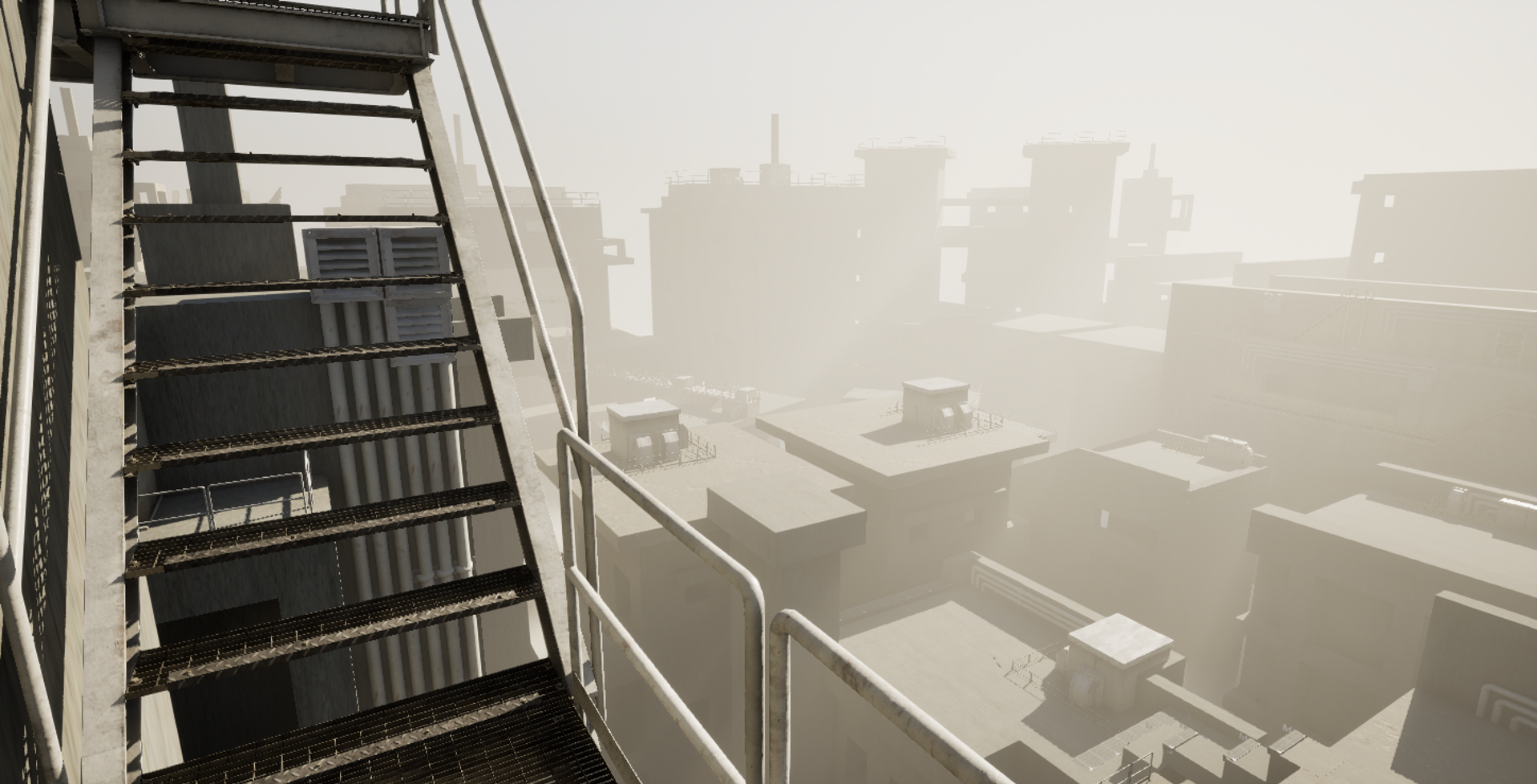
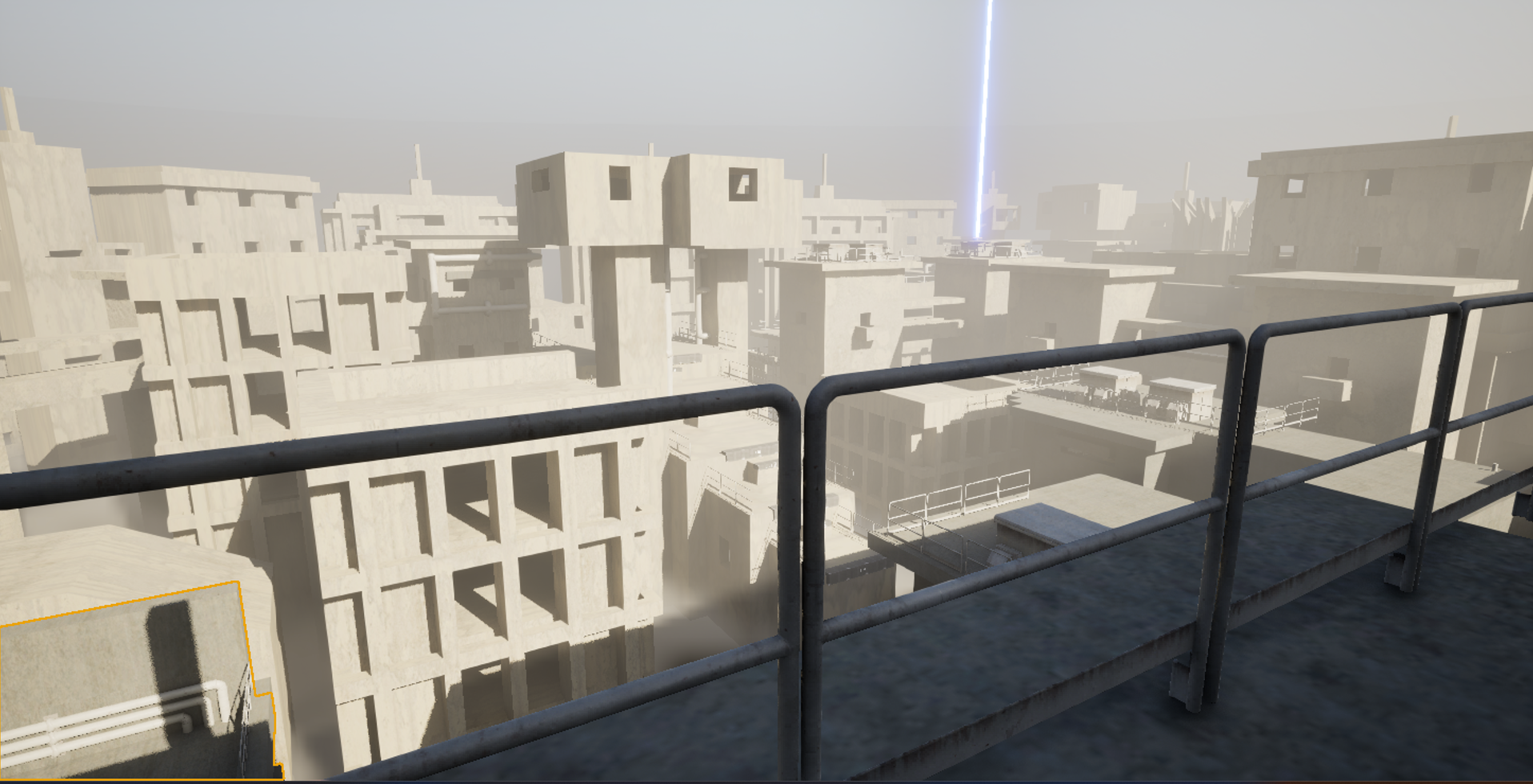
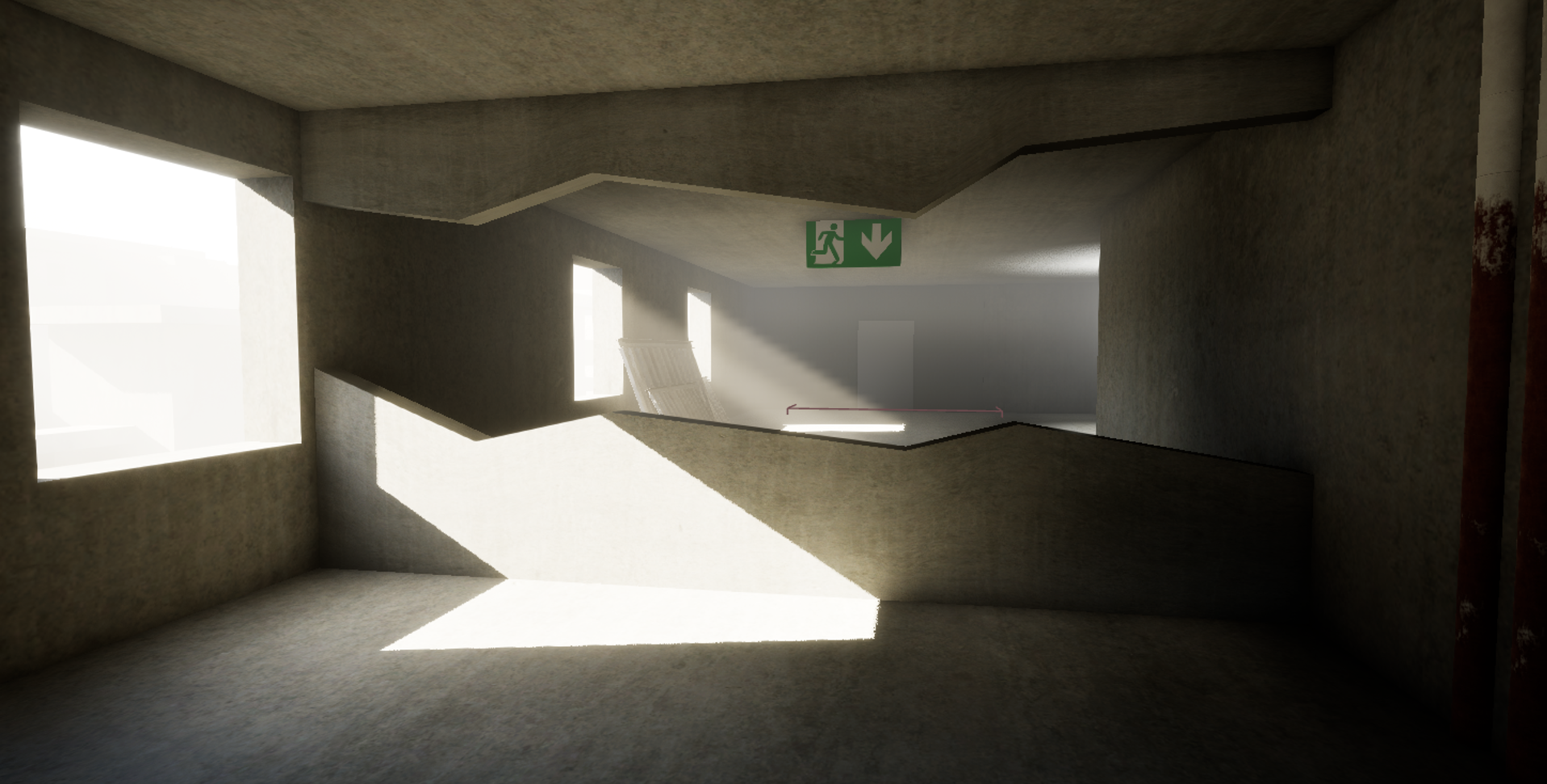
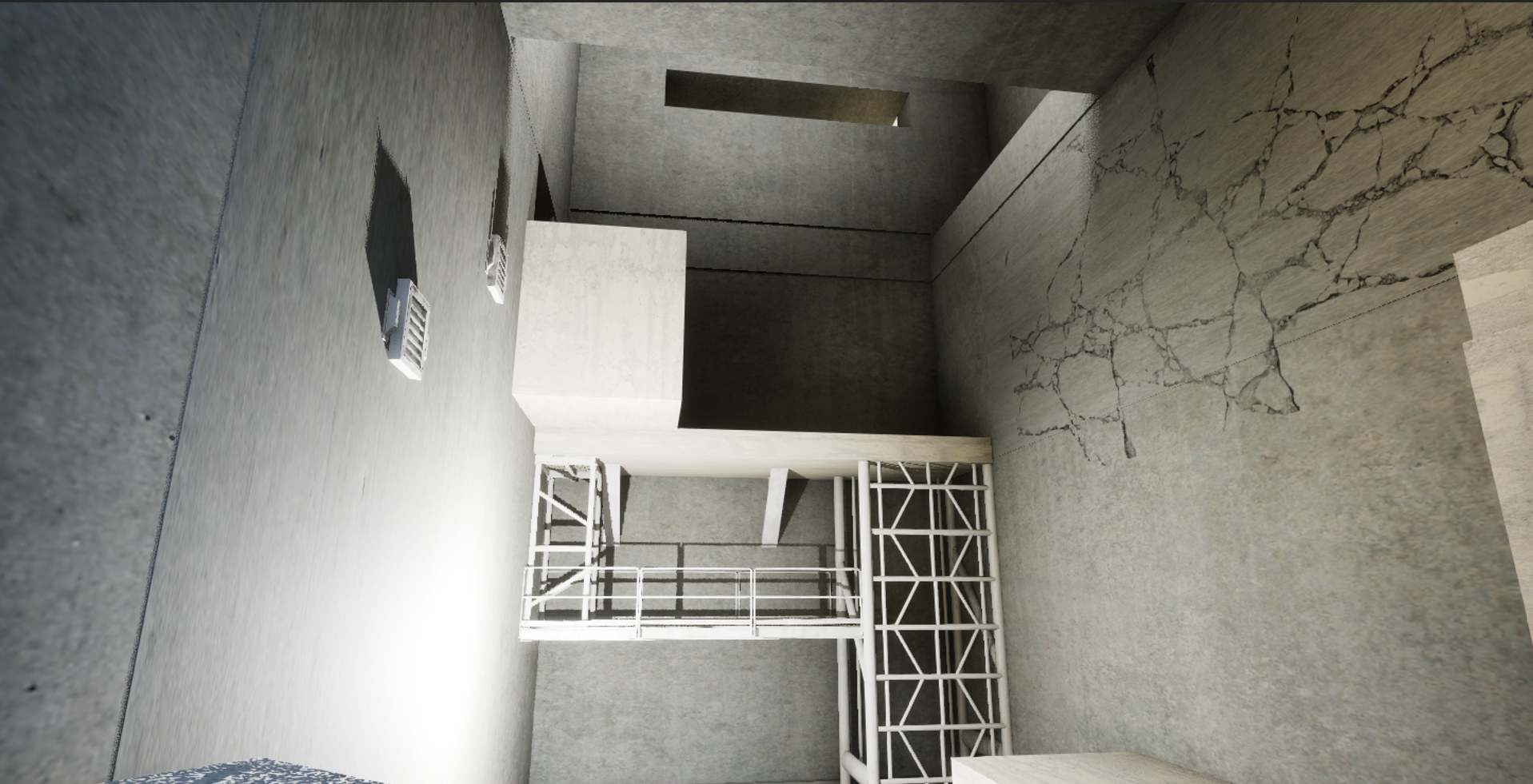
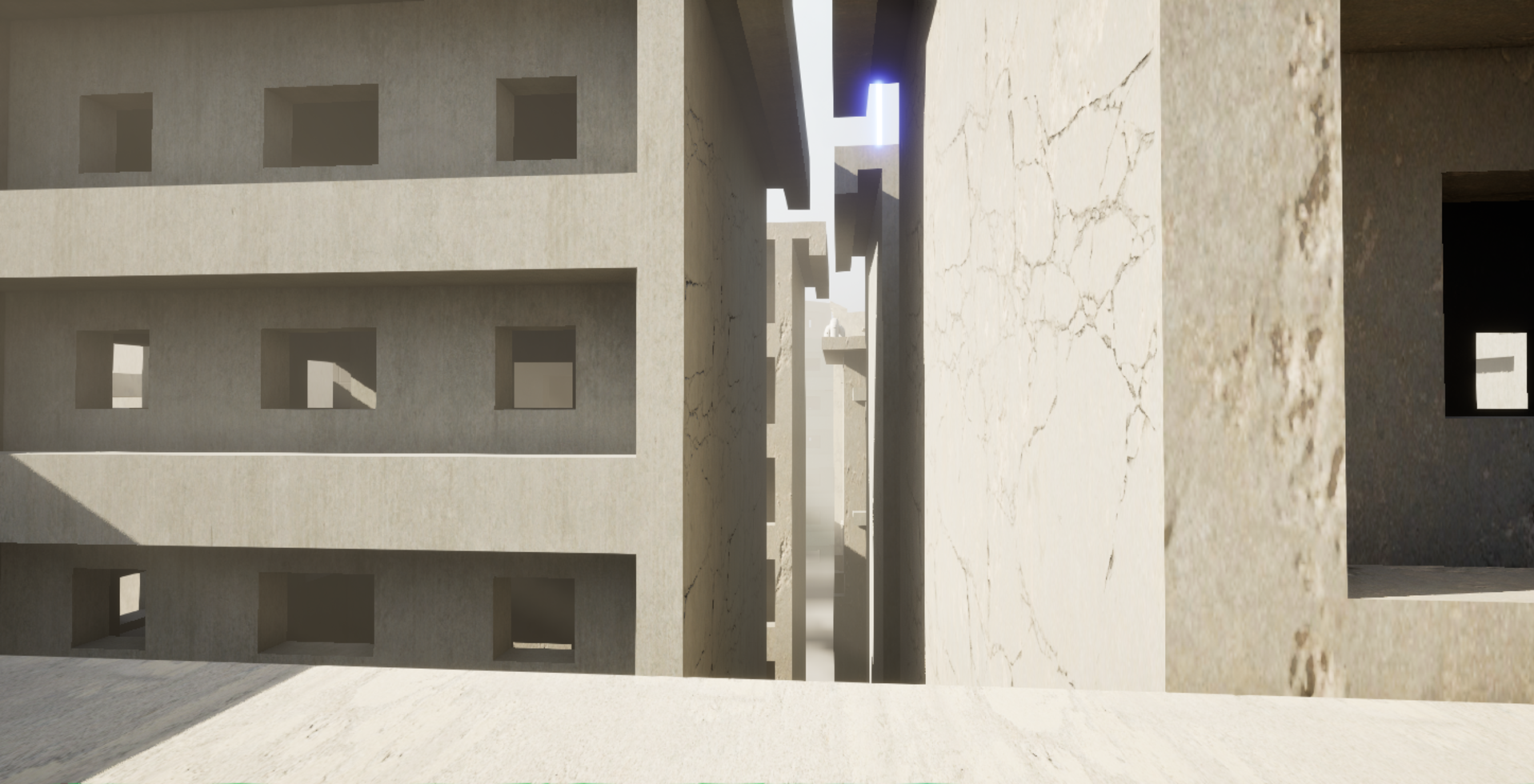
Synesthesia is a parkour-focused action-adventure game set in a dystopian brutalist world devoid of all colour. Players must navigate and free-run across rooftops, buildings, and varied terrain to reach mysterious beacons. By activating these beacons, players can restore colour and life to the world, gradually restoring the environment from decay.
The game and its core concept were heavily inspired by mirror's edge and our team’s desire to recreate the fantasy of being a parkour rebel

Core Loop
Role And Responsibilities

I designed, prototyped, and implemented the following:
-
The colour-change and guidance systems.
-
The enemies and threats of the world
-
The Air Kick mechanic(Known in parkour as tic-tac)
I also worked collaboratively with our level designer to set up world interactions such as sloped rooftops & set-pieces that the player encounters
Project Work
World Color System
Overview
The world colour system is an umbrella term I've created to refer to 4 mini-systems that work in tandem and all depend on the player's speed. These systems are:
1.Vision Color Saturation
2.Props and Mechanism Activation
3.Guiding Lights
4.Ledge Visualization

Vision & Props
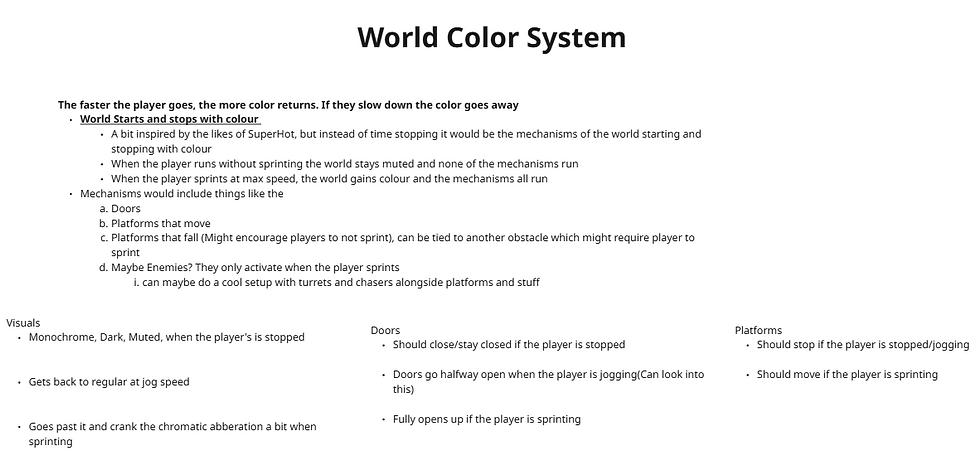
The initial conception of this system was simple. The faster the player goes, the more they can see in the level. Keeping this in mind. I created a simple document listing the things I wanted to create for a prototype


The mechanism system controls various different doors, platforms and even enemy turrets all depending on the player's speed. This was something we scrapped in the final build as we had to scope down and could not create extra levels around this.
Guiding Lights & Ledges

Through Playtesting our levels, we found out that most players had a hard time finding their way through our sprawling city.
As such I created 2 forms of guidance that our players could make use of.

The first of which was a guiding lights, which would only appear when the player slowed down and got lost. These blink to show players the correct path also fade away the closer the player is to them. They also fade away and are invisible if the player is running and has the right path figured out, so as to not break immersion.
The color saturation system, makes use of the player's speed & max speed to calculate how fast the player is going. Depending on this, it dynamically controls the post processing volume present in a level, and changes the level's color saturation.
To parkour through the level, the player also has set ledges that they can grab onto and mantle over. Keeping that in mind, I also added another form of guidance.
Mantle-able ledges become visible and stand out from the rest of the concrete jungle, highlighting a path for players without breaking too much immersion.
These ledges only become visible to players who sprint at max speed, so that players who want to take in the scenery can view it in full detail.

Project Work
Air Kick(Tic Tac)
How to make a turn feel good in a parkour game?


Conceptualization
(With my wonderful artistic rendition)

Prototype

Final Build
One issue we'd saw after creating level 1, was that our levels ended up having to be very linear and we could not include any real turns without having to slow the player down.
To try and combat this I decided to create an air kick mechanic, which would allow for the player to stick to certain surfaces, and kick themselves into the direction they're looking.
Project Work
Enemies
Conception and Design

Aside from making interesting platforming sequences in our game, we also wanted to include high intensity chase sequences in our game. To let our players experience this we created 2 different types of enemies:
1. A robot chaser
2. A flying airship/drone


